
Ford’s announcement that it plans to introduce Level 3 automated driving by 2028 marks a notable shift in tone and ambition. After years of measured expectations around self-driving technology, the company is positioning itself for a more concrete and legally defined step toward autonomy, focused on specific highway scenarios rather than broad promises of full automation.
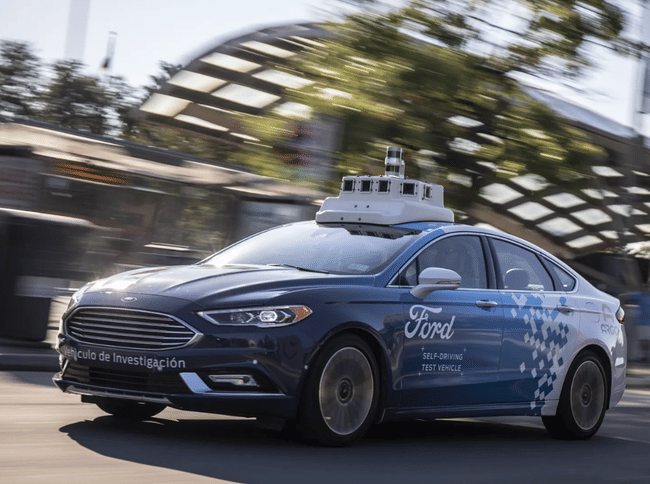
What sets this move apart is its regulatory realism. Level 3 systems transfer driving responsibility to the vehicle under clearly defined conditions, a fundamental departure from today’s driver-assistance features. For investors, this signals a strategy built around deployable technology and legal clarity, not speculative timelines—an approach that may prove more sustainable in the long run.
The new electric platform as the technological basis
A key element of the overall strategy is a new electric platform being developed by a dedicated Ford $F team in California. The first model based on this architecture is due to arrive in 2027 - it will be a mid-sized electric pick-up with a target price of around $30,000. It's on this platform that Level 3 technology is set to make its first appearance, though not as standard equipment.
Ford has not yet specified which specific model will get the autonomous software first, nor how much the feature will cost. Management says it is still considering whether it will be a one-time premium or a form of subscription. This suggests that the automaker sees autonomy not just as a technology, but as a long-term source of recurring revenue - similar to the BlueCruise system today.
The business of autonomy: software instead of manufacturing margins
From an investment perspective, it is key that Ford is explicit about finding the right business model. Assistance systems are fast becoming one of the few ways traditional carmakers can increase margins at a time when car prices are coming under pressure from competitors, particularly from China.
Ford already offers a Level 2 BlueCruise system in the form of:
a monthly subscription of about $50.
an annual payment of around $495
Level 3 should logically be even more expensive, but also more attractive because it shifts some of the responsibility from the driver to the car company. That makes it a potentially high-value digital product, not just an add-on to the car.
Lidar vs. cameras: Ford goes up against Tesla
On the technical side, Ford has confirmed that it is counting on the use of lidar for Level 3. In doing so, the automaker is clearly setting itself against the philosophy of Tesla $TSLA, whose CEO has long argued that autonomy can only be solved with cameras and software. The result is a paradoxical situation: Tesla has a massively expanded Full Self-Driving system, but formally remains at Level 2, while Ford is heading towards legally recognized autonomy.
WhileLidar increases costs, it also simplifies regulatory approvals and increases confidence in the safety of the system. This is one of the reasons Level 3 is so far limited exclusively to highways, where traffic situations are significantly more predictable than in cities.
Competition: Ford is not alone, but it is betting on accessibility
Ford is entering a space where several players already operate - but each with a different strategy:
Mercedes-Benz $MBG.WA already offers Level 3 in the U.S. in select markets, but only on expensive models and in limited circumstances.
General Motors $GM also plans to deploy Level 3 in 2028, starting with the luxury Cadillac Escalade IQ, priced at over $125k.
Stellantis $STLA, on the other hand, has put its Level 3 program on hold due to high costs and uncertain demand.
So Ford is trying to find a compromise: offer a technology that is not only the prerogative of the luxury segment, but at the same time is not mass deployed without an economic payoff.
Autonomy as an intermediate step towards robotaxis and AI cars
Level 3 is not the end station. For Ford - as for the sector as a whole - it is an intermediate step towards fully autonomous cars and potentially fleets of robotaxis. At the same time, the automaker plans to expand the role of AI directly into the user experience. The upcoming AI assistant is expected to work first as a mobile app and later directly in the car, where it will help with practical tasks - from load planning to image work.
In doing so, Ford is also trying to catch up with the software lead of its competitors, with General Motors already deploying Google Gemini-based conversational AI and other brands integrating their own digital assistants.
What to take away from Ford's announcement
Ford is getting back into the advanced autonomy game after years of hesitation, but it's doing so pragmatically:
It's not promising full self-driving
builds on the legally graspable Level 3
connects technology with a long-term software business
and targets a wider audience than luxury competitors
For investors, this means that Ford doesn't just want to be a car maker, but is gradually moving towards a software-driven mobile platform. But success will depend on whether it can reconcile safety, price and customers' willingness to actually pay for autonomy.