
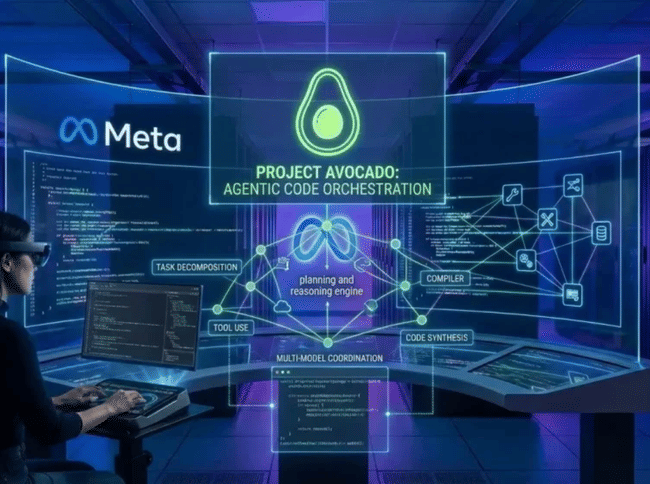
Meta is entering a new phase of its AI strategy built around a pair of flagship systems codenamed Mango and Avocado, scheduled to roll out in the first half of 2026. Mango is being developed as a high‑fidelity multimodal model for images and video, while Avocado is positioned as the next‑generation text model after Llama, with a focus on reasoning and coding that aims squarely at the territory now dominated by OpenAI and Google. Both sit inside Meta’s Superintelligence Lab led by Scale AI founder Alexandr Wang and are meant to turn Meta from a fast follower into a direct peer in state‑of‑the‑art foundation models.
Underneath that product roadmap lies one of the most aggressive AI capex plans in the market. Meta has guided for 2026 capital expenditure in a range of roughly 115–135 billion dollars tied largely to AI infrastructure, yet still generates tens of billions in annual free cash flow from its core advertising machine, leaving room for buybacks and dividends even after the AI build‑out. For investors, the message is that Mango and Avocado are not being financed with leverage or financial engineering, but with the cash gushing out of Facebook, Instagram and WhatsApp – a bet that today’s ad profits can underwrite tomorrow’s push toward superintelligence.
Mango and Avocado: the first wave after the Llama era
$META has officially unveiled Mango, aimed at generating images and videos, and Avocado, for text-based tasks, logic and programming. These are the first major products from Meta's new Superintelligence Labs division, which builds on the Llama family of models but aims higher in both multimodality and programming capabilities.
The company openly admits that Mango and Avocado may not be instantly the best in all areas compared to OpenAI, Anthropic or Google's $GOOG models. The goal is to have several strong domains that will be attractive to end users - especially in visual content generation and hands-on programming. It is these areas that are intended to help Meta strengthen its core products, from social networking to tools for creators.
Meta initially focused on a flagship model, codenamed "Behemoth," which was intended to be an answer to the most powerful models of the competition. However, its release has been repeatedly delayed due to concerns over performance and its ability to keep up with the top. Llama 4, launched in April, has not received the reception from developers that management expected, deepening Mark Zuckerberg's frustration with the pace of progress. Mango and Avocado thus come as a more pragmatic first step - preferring well-performing models in clearly chosen segments rather than a belated "perfect" jack of all trades.
135 billion dollars: Meta buys the future, but with its own money
Meta is planning capital investments in the range of $115 billion to $135 billion in 2026, nearly double the roughly $72 billion in 2025. The bulk of this is going into AI infrastructure: data centers, compute clusters, and specialized chips for training and deploying models.
The financial results for the fourth quarter of 2025 confirm the quality picture. Revenues were approximately $59.9 billion, up about 24% year-over-year, while net income increased to about $22.8 billion, up 9%. Earnings per share were around $8.9. Thus, Meta is showing that it is able to dramatically increase investment in AI without sacrificing margins and profitability.
This essentially raises the bar for the entire sector: it shows that if the underlying advertising business is strong enough, a tech firm can afford AI investments in the hundreds of billions of dollars without losing Wall Street's confidence. The planned $135 billion in capital spending thus doesn't feel like a gamble, but rather a statement of ambition - Meta wants to be one of the players that define the next generation of AI, not just one of many users of someone else's model.
Alexander Wang and Meta Superintelligence Labs
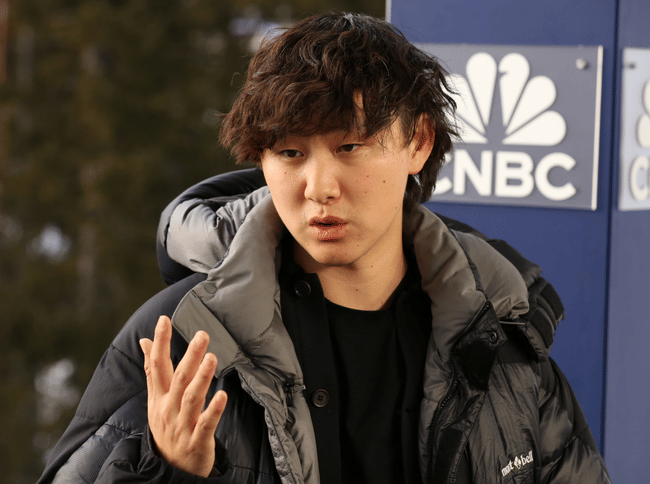
A key figure in Meta's new AI chapter is Alexander Wang. The 28-year-old entrepreneur, who became a self-made billionaire at the age of 24 thanks to Scale AI, now heads Meta's Superintelligence Labs division while remaining a member of Scale AI's board of directors.
Meta paid approximately $14.3 billion for a 49% stake in Scale AI, securing both the technology and the talent. Wang brought part of his team - the "Scalien" employees - to Meta, along with the know-how in data annotation, data infrastructure and practical deployment of AI in large organizations. Combined with Meta's in-house capabilities, this creates one of the largest integrated AI workplaces in the world.
Mark Zuckerberg is personally orchestrating the recruitment of this new generation of AI leaders. Meta has poached more than twenty researchers from OpenAI and other leading labs and is purposefully building a team to compete with Silicon Valley's elite research groups. Wang also maintains a close relationship with the US government - his Scale AI has won contracts to supply AI tools to the Pentagon, and Wang attended President Donald Trump's inauguration.
Meanwhile, the reorganization within Meta is one of the biggest in the company's history: AI is shifting from its role as a support tool for advertising to a central pillar to influence all major products - from feed and recommendation algorithms to messaging to virtual and augmented reality. Mango and Avocado are the first visible output layer of this transformation, but the real impact will depend on how quickly the company manages to transform internal processes, product teams and the development cycle around the next generation of models.
A partially open approach: between community and competitive advantage
Meta has long profiled itself as a proponent of a relatively open approach to models - something it has already demonstrated with the Llama family. With Mango and Avocado, however, the company is opting for a more sophisticated, "partially open" strategy.
Unlike competitors' fully closed models, Meta wants to make its models available to a wide range of users and developers around the world. The goal is clear: to create the largest possible ecosystem of applications and tools built on its models, thereby locking in its position as the preferred AI platform for consumers in the long term.
But at the same time, the company doesn't want openness to undermine security and its own competitive advantage. For Avocado, for example, it will not include the full range of capabilities to generate advanced cybersecurity or exploit code in publicly available versions. These features will remain limited or only available in a regulated environment to reduce the risk of exploitation.
This "calculated trade-off" is intended to keep Meta in an advantageous position: open enough to attract developers and users, but closed enough to maintain a technological edge where the most valuable capabilities are concerned. At the same time, the company is counting on its models not being the best "across the board," but it wants to dominate in a few strategic segments-for example, optimizing to run on mainstream PCs and end devices, where Meta can leverage its experience with mass-market consumer products.