
The U.S. Department of Justice unsealed an indictment on March 19 charging three people tied to Super Micro Computer with conspiring to illegally export at least 2.5 billion dollars worth of high performance AI servers packed with Nvidia GPUs to China in violation of export control laws. Co-founder, board member and senior vice president Yih-Shyan "Wally" Liaw, 71, was arrested in California and later released on bail, while Taiwan sales manager Ruei-Tsang "Steven" Chang remains a fugitive and third party contractor Ting-Wei "Willy" Sun was also taken into custody. The alleged scheme, which ran through 2024 and 2025, used a Southeast Asian front company to place purchase orders with Super Micro, fabricated shipping documents and staged dummy servers to pass export compliance audits before routing the technology to Chinese buyers.
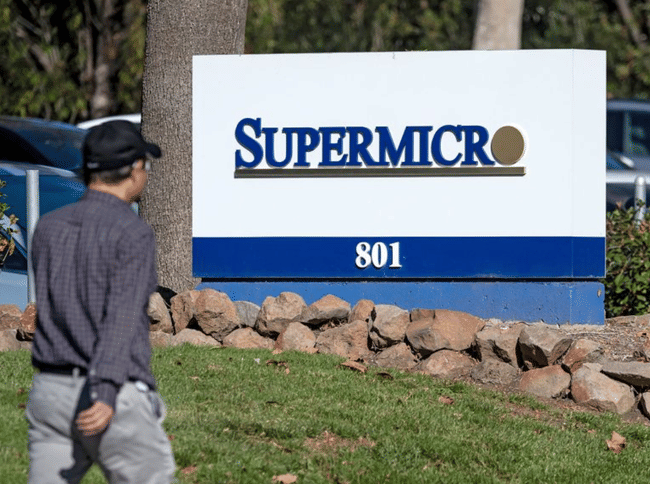
Super Micro said it is cooperating with the investigation, suspended Liaw and placed another employee on administrative leave while terminating a contractor, and stressed that the conduct described in the indictment "contravenes the company's policies and compliance controls". The stock fell as much as 27 percent on the news, adding to a long list of reputational shocks that have hit the company since its accounting controversy in 2024, and raises fresh questions for investors about whether the compliance and governance weaknesses that allowed this alleged scheme to reach 2.5 billion dollars in diverted sales are isolated individual failures or something more structural.
What exactly does the US government claim
The indictment accuses Liaw, as well as Ruei-Tsang "Steven" Chang and Ting-Wei "Willy" Sun, of conspiring to smuggle U.S. AI servers into China without the required licenses from the Commerce Department. Super Micro is one of the key manufacturers of servers equipped with Nvidia chips, which are prohibited from being exported to China without government approval for national security reasons.
According to the indictment, the defendants used a combination of:
false documents claiming the servers were destined for other customers.
fake "dummy" servers to deceive inspectors during inspections.
complex transshipment routes through third countries to conceal the true destination of shipments.
The DOJ reports that through this scheme, Super Micro generated at least $2.5 billion in revenue between 2024 and 2025.
Super Micro $SMCIResponse
Super Micro issued a statement emphasizing that the company itself is not a defendant in the indictment and that it is cooperating with authorities. Two employees named in the case have been suspended, and the contractor has been fired.
The company claims that the actions of these individuals violated company policies and compliance systems. However, this is a phrase that investors hear repeatedly with Super Micro - the company also went through a forced suspension of results over accounting irregularities and the threat of delisting from the stock market in recent years before it stabilised its situation.
Why Super Micro is in the spotlight again
Super Micro is one of the largest AI server manufacturers in the United States, and its products power the infrastructure of large hyperscalers and AI companies. It's this role that makes it an attractive target for those looking to bypass US export controls, as its servers equipped with Nvidia chips are among the most powerful platforms available for training and running AI models.
The case fits into a broader trend: the US government has stepped up its fight against illegal AI technology exports to China, and indictments for smuggling Nvidia GPUs are now relatively common. But so far, most of the cases have involved outside players - resellers, shippers and brokers. The Super Micro $SMCI case is more sensitive because the accused are people with direct ties to the manufacturer itself, and one of them is even a co-founder of the company.
Impact on Nvidia and the AI server ecosystem
While Nvidia $NVDA is not charged in the case and is cooperating with the authorities, the case inevitably casts a shadow on it as well. Super Micro is one of its key partners and distribution channels for GPUs into AI servers, and any tightening of controls or shutting Super Micro out of part of the market will affect Nvidia's chip flows.
At the same time, Nvidia itself is under pressure over export controls: CEO Jensen Huang has repeatedly criticized the restrictive policy as economically damaging, estimating that in a single quarter Nvidia lost approximately $2.5 billion in H20 revenue due to the ban on advanced chip sales to China. While the Super Micro case shows that chips are making their way into China despite the controls, it is also a reminder to Nvidia that allegations of "leakage" of its GPUs through third parties may increase political pressure for even tighter regulation of its distribution channels.
Impact on stocks and investment risks
The immediate market reaction - a 14.6% drop in Super Micro - reflects a combination of concerns:
Legal risk: even if the company as a whole is not charged, investigations may bring additional costs, penalties or restrictions.
Reputational risk: For a company that has only recently settled an accounting case, each new scandal is a major blow to customer and partner confidence.
Operational risk: temporary staff suspensions and possible widespread investigations can disrupt business operations.
Regulatory risk: the US Department of Commerce may tighten the conditions under which Super Micro operates or exports.
Super Micro is in a delicate position: it is a key link in the AI infrastructure supply chain, so any restriction on its operations would affect customers who rely on its servers. If the investigation widens or the company loses certifications and licenses, it could also affect the performance of existing contracts.
Wider context: AI chip smuggling as a growing issue
The Super Micro case is not unique in the US justice space. In the past year, multiple groups have been charged or arrested for illegally exporting Nvidia GPUs to China:
Operation Gatekeeper in late 2025 uncovered a network of AI chip smugglers and led to the seizure of more than $50 million worth of GPUs.
In November 2025, the DOJ charged three Chinese nationals with smuggling Nvidia chips through Malaysia and Thailand.
In August 2025, two Chinese nationals were arrested in Los Angeles for exporting Nvidia GPUs through a network of transshipment companies.
The pattern is similar in all cases: false documents, third-country brokerage firms, and efforts to conceal the final destination of the shipment in China. This suggests that demand for US AI chips in China is so strong that it motivates systematic and well-organized attempts to circumvent controls, and that the US government has intensified its monitoring of these flows.
What to watch next
For investors watching both Super Micro (SMCI) and Nvidia (NVDA), the following questions are key:
Whether the Justice Department will extend the indictment to the company itself or other employees.
How Super Micro will operationally manage the loss of two key employees and the potential reputational impact on business relationships.
whether the case will prompt U.S. authorities to tighten export licensing terms for AI server makers.
what signal it sends to the entire AI server sector regarding compliance and supply chain controls.
Super Micro has been through several crises over the past two years and has managed to bounce back each time due to strong demand for AI infrastructure. This time, however, the challenge is qualitatively different: it's not just about accounting, but about allegations that people running the company knowingly orchestrated the circumvention of US export laws, with proceeds from the scheme exceeding $2.5 billion. How much this affects the trust of partners, customers and regulators will be a crucial question for the future of Super Micro.