
Over the past two years, Palantir has experienced one of the wildest rides on Wall Street. It’s now down 27% year-to-date—but the company’s numbers look better than ever.
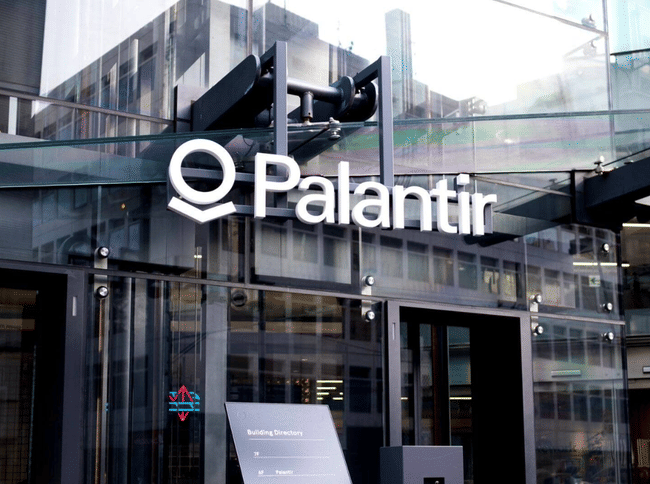
If someone had said in the summer of 2024 that Palantir’s stock would quadruple in a year, they would likely have been laughed at. Yet that’s exactly what happened. Palantir Technologies $PLTR climbed from about $21 in June 2024 to an all-time high of around $207 in November 2025 —and then the decline began. Today, the stock is trading around $128, which is 27% lower than where it started 2026.
Numbers That Leave Analysts Breathless
Palantir reported revenue of $1.63 billionin the first quarter of 2026 —up 71% year-over-year. Adjusted earnings per share reached $0.33, beating analyst estimates by more than 18%. Based on these results, management immediately raised its full-year outlook: the company now expects revenue of $7.65 to $7.66 billion in 2026, which would represent 71% growth compared to the previous year.
The U.S. business division—the one that attracts the most attention—is growing even faster. In the most recent reported quarter , U.S. commercial revenue rose 137% year-over-year. The company also reports over 950 customers and a “Rule of 40” score of 114—a figure that most established software companies can only envy.
The Problem of Valuation
This is where the story gets complicated. Even after the sell-off since the start of the year, Palantir is trading at approximately 144 times net income and roughly 75 times revenue. These are figures that are virtually unprecedented among established companies.
By comparison, $NVDA Nvidia, which is growing at a similar pace, trades at a fraction of that multiple. And RBC Capital, one of the most skeptical voices on Wall Street with a price target of $50, openly states that today’s price implies a decade of flawless execution without the slightest hesitation.
"Palantir’s current valuation assumes that the company will become the world’s largest software company—while maintaining margins that almost no company achieves today. That’s an extremely narrow path for investors."
Rishi Jaluria, analyst at RBC Capital Markets
At the other end of the spectrum are UBS, with a price target of $200, and Rosenblatt Securities, with a price target of $225 —both firms argue that Palantir is building a sustainable competitive advantage through its ontological platform, which is becoming, for customers, an operating system for AI-driven decision-making.
The range of analyst targets from $50 to $225 says it all about how divided the market is on Palantir.
From Intelligence to Business—and Now to the Military
Palantir was founded in 2003 as a contractor for U.S. intelligence agencies. The founders—including Peter Thiel and Alex Karp, who remains CEO today—built the Gotham and Foundry platforms to analyze massive datasets for the military and governments.
Today, the company generates roughly 54% of its revenue from government customers and 46% from the commercial sector. The government sector is not merely a source of recurring revenue—in August 2025, Palantir signed a 10-year contract with the U.S. military worth up to $10 billion, consolidating 75 existing contracts into a single agreement. Shortly thereafter came a billion-dollar deal with the British Ministry of Defense.
It is precisely this expansion into the European defense market that is a key topic to watch in 2026. Increased defense spending by NATO countries following Russia’s invasion of Ukraine is opening doors for Palantir to markets where, until recently, it had no presence at all.
AIP: A Bet That’s Paying Off So Far
The key product of the last two years is AIP—the Artificial Intelligence Platform. It is an environment that allows companies to deploy large language models on their own internal data —securely, without having to share sensitive information with external providers.
It is AIP that is driving the explosion in commercial customers. Palantir organizes so-called “boot camps,” where, over the course of a few days, it demonstrates concrete results on potential customers’ own data. According to the company’s reports, the conversion rate for these events is exceptionally high.
“AIP demonstrably compresses what would otherwise take months into days. We’re seeing customers sign multi-year contracts after just three days of boot camp—that’s something unparalleled in enterprise software.”
Alex Karp, CEO of Palantir, in a letter to shareholders, Q3 2025
So where does the truth lie?
Palantir is in a strange situation: operationally, it has never had better times, yet its stock has lost more than a quarter of its value this year. Part of the sell-off is due to the exit of some speculative capital, part to Michael Burry, who disclosed a short position in Palantir at the end of 2025— and part simply to gravity, which eventually catches up with every stock trading at extreme multiples.
The next important milestone is August 10, 2026, when the company will report its second-quarter results. If commercial growth in the U.S. remains in the triple digits and management raises its outlook again, the market will have a new reason to resume its rally. If the pace slows—even slightly—the bears will have exactly the data support they’ve been waiting for.