
Alphabet joins the world’s most famous stock index. Verizon exits after 22 years, taking with it the last pure-play telecom company in the Dow.
The End of an Era: Telecom Leaves the Dow Jones
When Verizon joined the Dow Jones Industrial Average in April 2004, it symbolized the expansion of the mobile era. Wireless networks were growing, smartphones were just emerging, and telecommunications looked like the sector of the future. Two and a half decades later, another symbol is emerging—this time pointing in the opposite direction.
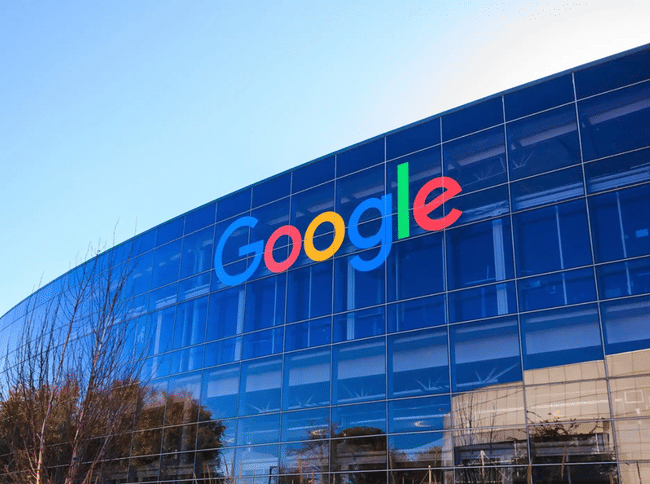
S&P Dow Jones Indices announced on June 23, 2026, that Alphabet $GOOG will replace Verizon $VZ in the Dow Jones Industrial Average $^DJI. The change will take effect on June 29 before the market opens. After 22 years, the telecommunications giant is thus leaving the 30-member club of the world’s most closely watched stock index.
Since joining the index in 2004, Verizon’s stock has risen by only about 40% (excluding dividends)—while Alphabet has gained over 13,000 percent over the same period since its IPO in August of that year.
Why now—and why Alphabet?
The Dow Jones is a price-weighted index, which means that each stock’s influence is based on its absolute price, not its market capitalization. Verizon was trading around $47 per share and represented just 0.5 percent of the index’s value —a virtually negligible share. It had only a minimal impact on the Dow Jones’s day-to-day movements.
Alphabet, on the other hand, is currently trading around $346 per share and, upon inclusion, will become the sixth most influential component of the entire index. In explaining the change, S&P Dow Jones Indices stated that Alphabet better represents the communications services sector and will bring exposure to artificial intelligence, cloud infrastructure, and digital advertising to the index.
With the addition of Alphabet, the Dow Jones will, for the first time in history, become an index that includes all five of the largest tech giants simultaneously—alongside Alphabet, these are Nvidia $NVDA, Amazon $AMZN, Apple $AAPL, and Microsoft $MSFT. According to CNBC, Alphabet’s stock rose by approximately one percent in after-hours trading following the announcement.
"The importance of traditional telecoms has clearly diminished. Alphabet’s inclusion reflects the market’s recognition of its long-term growth potential and industry leadership."
Ayako Yoshioka, Senior Investment Strategist at Wealth Enhancement
What They Had to Do With the Index Price
Swapping two stocks with such different prices requires a mathematical adjustment. The Dow Jones is calculated as the sum of the prices of all thirty components divided by a special number—the so-called divisor. If we simply replaced Verizon with Alphabet without adjusting this number, the index would artificially rise without anything in the market actually changing in value.
S&P Dow Jones Indices will therefore adjust the composition before the market opens on June 29. The new value will be published on June 26 at the end of the trading day so that index funds can incorporate it into their portfolios in time.
And it is precisely these passive funds that are in for an interesting move: ETFs such as the SPDR Dow Jones Industrial Average ETF ($DIA) must buy Alphabet shares and sell Verizon shares. Given the size of these funds, the volume involved could visibly impact both stocks around June 29.
Verizon: 22 Years in the Index, but No Glory
Verizon joined the Dow in April 2004 as the successor to AT&T $T —at the time still with a reputation as a dynamic operator that had replaced the old guard. But the story didn’t unfold as planned.
Over the entire period it has been in the index, its stock (excluding reinvested dividends) has risen by only about 39.5 percent. By comparison, the broader market has appreciated several times more over the same period. Verizon was a dividend stock for conservative investors—with a yield of over 6 percent, but with negligible room for capital growth, as summarized in an analysis by The Motley Fool.
Paradoxically, in 2026 —the year Verizon completed its $20 billion acquisition of Frontier Communications and significantly expanded its fiber-optic network—it was removed from the index. The market remembers a decade of weak performance, not a recent strategic move.
“Verizon accounted for only half a percent of the index’s value. A component like that simply does not serve the purpose of a benchmark, which is to reflect the U.S. economy.”
Analytical commentary from S&P Dow Jones Indices on the reasons for the change
Alphabet Enters the Index: Sixth-Largest Weighting
Alphabet’s stock is up approximately 10 percent in 2026 compared to the start of the year— despite a turbulent period marked by regulatory pressures and legal disputes in both the U.S. and Europe. This marks the fourth consecutive year the company could end on a positive note.
In terms of business structure, Alphabet brings a level of diversification to the Dow that none of the existing technology members has offered. Google Search dominates approximately 90 percent of the global internet search market, YouTube is the second-most-visited platform in the world, the Google Cloud division is growing at double-digit rates, and the entire group is investing heavily in artificial intelligence through its Gemini series of models.
The inclusion in the Dow Jones is, to some extent, symbolic—Alphabet has long been part of the S&P 500 $^GSPC and the Nasdaq 100. But the Dow Jones has its own appeal. It is an index followed by millions of retail investors and cited in major news broadcasts as a barometer of the U.S. economy.
It wasn’t until 2022, when Alphabet carried out a 20-for-1 stock split and reduced the price from approximately $2,200 to about $110, that it became technically eligible for inclusion in the price-weighted Dow Jones. Before that, a single Alphabet share would have dominated the entire index and distorted its movements.
What This Says About Today’s Market
The change in the Dow Jones’ composition is not merely an administrative matter.It is a signal of where the center of gravity of the U.S. economy has shifted. As recently as 2004, a telecommunications operator was the natural representative of American business—infrastructure, millions of customers, stable cash flow.
In 2026, it is being replaced by a company whose most valuable assets are intangible: algorithms, data, artificial intelligence, and a global advertising platform. The Dow Jones is 130 years old and has undergone more than fifty changes during that time. Each of these changes was a snapshot of what was driving the American economy at that moment.