
The pharmaceutical giant weathered the decline of Humira better than anyone expected. Now it’s spending more than it has in five years to secure its future for the next decade. But there’s a catch.
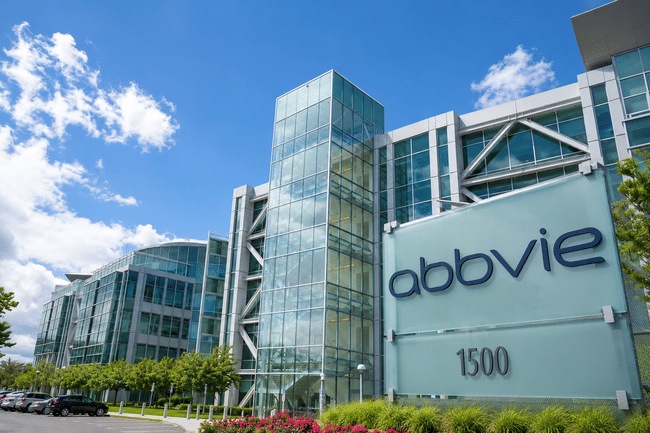
The pharmaceutical industry has one unpleasant characteristic: even the best drug will eventually lose its patent protection, and sales will collapse like a house of cards. AbbVie $ABBV went through this with Humira, once the world’s best-selling drug. And instead of recovering from that, it’s spending billions right away to ensure a similar scenario doesn’t happen again.
This time, it’s digging deep into its pockets. AbbVie announced the acquisition of biotech firm Apogee Therapeutics $APGE for $10.9 billion in cash. That’s roughly 240 billion crowns and also AbbVie’s largest acquisition since it swallowed up Botox maker Allergan for 63 billion in 2019.
A drug that only needs to be injected twice a year
The entire deal hinges on a single molecule. It’s called zumilokibart, an experimental antibody for atopic dermatitis—the most common form of eczema—and, in the future, for asthma as well.
What makes it interesting is not so much its effectiveness as its convenience. The current market leader, the drug Dupixent from Sanofi and Regeneron, is administered via injection every two weeks. Zumilokibart aims to allow patients to get by with just one injection every three to six months. In the second phase of trials, roughly two-thirds of patients achieved significant skin clearance after 16 weeks, with a dosage that can be counted on the fingers of one hand per year.
The market at stake is surprisingly underserved. Jeffrey Stewart, head of AbbVie’s commercial division, noted during a conference call that only about 8 percent of patients with atopic dermatitis are currently receiving treatment—the lowest rate among all immunological categories, yet the fastest-growing one. In other words: there is a clear market leader, but the overwhelming majority of patients still remain untreated.
"We believe the deal makes sense and that AbbVie is the ideal buyer to maximize zumilokibart’s potential."
Brian Abrahams, analyst at RBC Capital Markets
The Shadow of Humira, Which Will Never Completely Disappear
To understand why AbbVie is willing to pay nearly a 50 percent premium over Apogee’s market price, one must look at the company’s recent history.
For years, Humira was literally a cash cow. But when its patent protection expired and cheaper biosimilars flooded the market, sales began to plummet. According to available data, in the first quarter of this year alone, they fell by nearly 39 percent to $688 million. For a company that had built a large part of its business on a single drug, this was a test of survival.
And AbbVie passed it. Today, two successors are driving sales in place of Humira:
Skyrizi —an antibody for psoriasis and inflammatory bowel disease, with sales of around $17.6 billion last year
Rinvoq —a so-called JAK inhibitor for inflammatory diseases, with over $8 billion in sales last year
Together, this duo generated over $30 billion, and AbbVie’s entire immunology division grew by 14 percent last year. The company not only weathered Humira’s decline but emerged stronger than before. In this light, the acquisition of Apogee is a logical next step—AbbVie doesn’t want to wait until Skyrizi and Rinvoq eventually run out of steam.
A Bet on 2030 with an Open End
But this brings us to the most interesting—and at the same time, the riskiest—part. Zumilokibart is not yet a finished drug. The third, decisive phase of clinical trials is not scheduled to begin until the second half of this year, with results expected around 2028 and approval not anticipated until early 2030 at the earliest. AbbVie itself admits that the drug won’t start contributing to earnings per share until 2032.
In other words: the company is paying $11 billion in cash for a promise that won’t be confirmed for at least four years—and may not be confirmed at all.
Furthermore, some analysts point out a particular risk. The competing drug Dupixent attacks inflammation from two angles, while zumilokibart relies on only one. AbbVie’s management claims this isn’t a problem and that the efficacy data are strong. But if it ultimately turns out that the new drug is easier to administer but no more effective, it could end up as a niche option rather than the new market leader for which AbbVie is paying billions.
"Buying Apogee now makes sense. The drug has the potential to achieve mega-blockbuster status with peak annual sales exceeding $10 billion."
Robert Michael, CEO of AbbVie
The market has so far reacted mildly positively — AbbVie’s stock jumped by about 4 to 5 percent following the announcement and is trading around $234 today, placing the company among the pharmaceutical giants with a market capitalization of over $400 billion (about 8.8 trillion crowns). Apogee surged by about 50 percent to the offer price.
What the Numbers and Analysts Say
For investors, AbbVie is primarily attractive as a dividend stock. The company pays a quarterly dividend of $1.73 per share, which corresponds to a yield of around 3 percent, and is among the so-called “dividend aristocrats”—companies with a long history of regularly increasing their payouts. Meanwhile, the stock is trading near its annual high—over the past 52 weeks, it has ranged from roughly $182 to $245.
Key figures worth noting:
Market capitalization: over $400 billion
Dividend yield: around 3% (quarterly dividend of $1.73)
Analysts’ average 12-monthprice target: roughly $254 (range from $184 to $328)
Zumilokibart itself, however, could be more than just a safety net. Following the release of Phase 2 data, analysts at Guggenheim Securities doubled their peak revenue estimate for the drug to $5.2 billion annually. While that’s a fraction of what Skyrizi and Rinvoq generate, it’s still a significant figure for a single drug.
"The market has long been searching for late-stage growth assets. This acquisition should therefore be well received by investors."
Chris Schott, J.P. Morgan analyst
The next test, however, won’t come from Apogee. It will be AbbVie’s second-quarter earnings report, which the company will release on July 24. Investors will be watching Skyrizi’s sales closely against the backdrop of a raised full-year outlook of around $21.6 billion. It is precisely this pair of Humira successors—not a drug that won’t go on sale for another four years—that is keeping the stock afloat right now.
Interestingly, this acquisition fits into a much broader trend. Major pharmaceutical companies across the industry are now aggressively buying up biotech firms with late-stage drugs, as patents for many of their key products are set to expire soon. Rather than patiently waiting for their own research—which takes years—they’re simply buying the next big hit. AbbVie is simply confirming that it is among the most active players in this game—following the acquisitions of ImmunoGen and Cerevel in 2023, Apogee is another piece of the puzzle. The question remains whether the $11 billion bet will pay off, or whether AbbVie has paid for an expensive option that will never turn to gold.