
The Strait of Hormuz has been effectively closed since late February 2026, when U.S. and Israeli strikes on Iran, including the killing of Supreme Leader Ali Khamenei, triggered retaliatory missile and drone attacks and an IRGC warning prohibiting vessel passage. Tanker transits collapsed by more than 80 percent in the first days of March, Iran has since carried out more than 21 confirmed attacks on merchant ships, and roughly 1,000 vessels remain stranded in the Persian Gulf with about 25 billion dollars of cargo on board, disrupting approximately 20 percent of the world's daily oil supply.
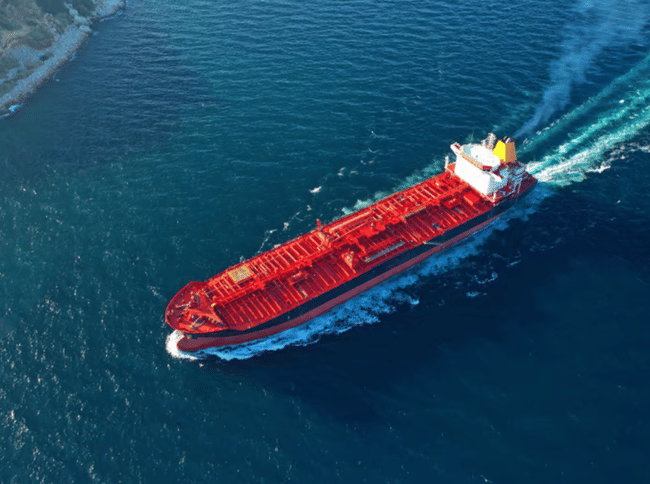
Into that vacuum, the Trump administration announced the most ambitious public‑private maritime insurance program since the Cold War. The U.S. International Development Finance Corporation named Chubb as lead underwriter for a 20 billion dollar war‑risk reinsurance facility designed to restore insurability for ships willing to transit the strait. Chubb will set pricing and terms, issue policies and handle all claims for qualifying vessels, covering war hull risk, war protection and indemnity and cargo, while the DFC will coordinate a consortium of American reinsurers and define the government eligibility criteria ships must meet before accessing coverage. The scheme is unprecedented in modern peacetime: Washington has decided the geopolitical risk is too large and too systemic for private insurance markets alone to absorb, so a government guarantee sits behind every policy that Chubb writes.
Why the Strait of Hormuz is so critical
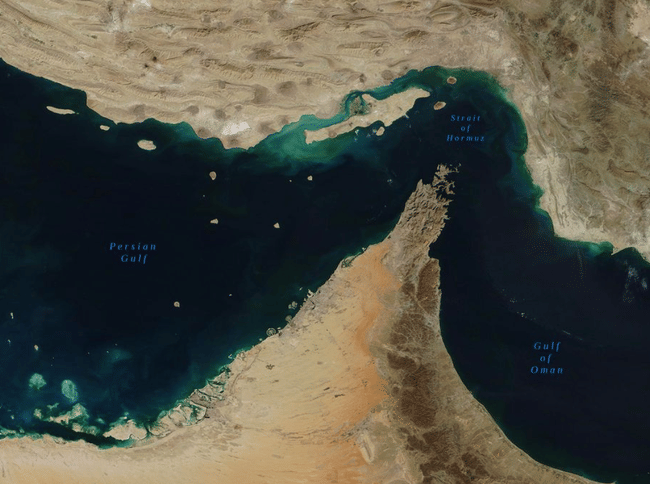
The Straitof Hormuz is a narrow sea lane between the Persian Gulf and the open ocean through which roughly 20-25% of the world's seaborne oil traffic flows. Tankers from Saudi Arabia, Iraq, the United Arab Emirates, Kuwait and elsewhere pass through it and it is considered the most important 'energy neck' of the planet.
The US-Israeli conflict with Iran has changed the situation dramatically:
Iran has declared the strait closed and has been attacking or intimidating ships attempting to pass through since March 4, 2026.
The US attack on an Iranian war tanker off Sri Lanka further escalated the situation.
The U.S. further attacked Iran's Kharg oil export terminal, Iran's key export hub for oil.
The result is transport paralysis, oil price spikes and a threat that goes far beyond the Middle East: those who need Gulf oil must pay significantly more or look for alternative sources and routes.
How wartime marine insurance works
Standard marine insurance covers the usual risks - accidents, weather, piracy. War risk is explicitly excluded from these policies and must be bought separately, usually at significantly higher premiums.
In calm times, war insurance premiums for Hormuz passage are a minimal affair. Today it is different:
Gulf and Strait war insurance premiums have skyrocketed and are effectively unaffordable for many ships.
Without insurance coverage , the shipowner, the bank financing the ship, and the cargo carrier bear the risk of hundreds of millions of dollars in losses in the event of an attack or seizure.
Insurance and reinsurance companies such as Lloyd's of London do offer insurance, but with increasingly stringent conditions and rising prices.
The result: even if the war doesn't physically close the Straits, commercial ships without affordable insurance aren't going anywhere. Thus, the insurability of shipping is as important as the physical security of the passage itself.
What Chubb and DFC offer
The U.S. government agency DFC (U.S. International Development Finance Corporation), in partnership with the Treasury Department, announced a $20 billion marine reinsurance plan in early March to make insurance coverage for ships in the Straits effectively available again. Chubb $CB has been selected as the lead underwriter - it will issue the policies, assume the risk and manage all claims.
The structure of the program looks like this:
Chubb, as direct underwriter, issues policies for eligible ships.
Chubb is backed by a consortium of US reinsurers as a second layer of risk.
behind the consortium is DFC as the final safety net, covering losses up to $20 billion on an ongoing basis.
Coverage includes:
war hull and engine room riskinsurance.
War P&I insurance (protection and indemnity, covers third party liability, crew, etc.).
war cargo insurance (war cargo insurance).
The whole scheme is a public-private partnership: the government brings a volume of guarantee that the private market could not handle on its own, and Chubb brings insurance expertise and contractual infrastructure.
Terms and uncertainties
The fundamental question is what Chubb and the DFC mean by "certain conditions" for accessing insurance. The information available so far suggests that:
ships must meet eligibility criteria set by the US government.
the US government plans to provide sea escorts for qualified ships.
The program will initially focus mainly on tanks and cargo ships carrying energy and commercial goods.
The ambiguity around the conditions is an investment issue: if the pool of eligible ships is too narrow or the conditions too stringent, the program may not effectively unlock passage through the Strait, even if it is formally available. One source says bluntly that the program will work "only after the Strait opens" - i.e., that insurance coverage alone will not allow passage unless military tensions ease.
Why the Trump administration is betting on insurance coverage
On 3 March 2026, President Trump publicly pledged that the US would provide political risk cover for ships carrying oil and gas from the Middle East at a "very reasonable price". This was in direct response to the escalation of the conflict and the beginning of the shipping paralysis.
From Washington's point of view, this approach makes strategic sense:
Restoring the flow of oil pushes down energy prices and eases inflationary pressures at home.
Insurance guarantees are cheaper than a direct military escort of each ship.
With a U.S.-government guarantee, Washington seeks to maintain the flow of shipments without the need for a definitive military solution to the conflict with Iran.
It is also a geopolitical signal: the US is signaling that it will not let Iran effectively shut down the global oil market without immediately escalating a direct military conflict.
Impact on markets and the energy sector
The Hormuz crisis is one of the most significant market risk factors today:
Oil prices have risen sharply following the closure of the Strait, and analysts speak of the potential to reach levels not seen since the oil shocks of the 1970s.
Energy firms with production outside the Gulf - particularly US oil and gas producers(ExxonMobil $XOM , Chevron $CVX , ConocoPhillips $COP , Pioneer) - are indirectly advantaged by the crisis.
In contrast, Asian economies heavily dependent on Middle East oil (Japan, South Korea, China) are under significant pressure.
Shipping companies and tankers such as Frontline $FRO , Euronav or Nordic Tankers $NAT are balancing between extremely high war premiums and potentially very high transit costs in times of crisis.
It is also an extremely exposed project for Chubb itself. As a major underwriter, it bears direct insurance risk, albeit covered by a government reinsurance program. If there are massive losses (billions of dollars worth of ships sunk or seized), the level of compensation and the speed of claims payments will be a major test for the entire structure.
What to watch next
Whether there will actually be a military lull or a diplomatic breakthrough that actually opens the Strait - without that, insurance cover is just ready-made infrastructure with no use.
How quickly Chubb and the DFC will publish the specific terms of access to the insurance policy and who will be eligible.
how oil prices evolve - if the Strait opens and supplies are released, prices could plummet, affecting the entire energy sector.
whether the scheme will attract other large insurance and reinsurance companies as added partners, which would increase the capacity of the scheme and the credibility of the cover.
The Strait of Hormuz has been closed or heavily restricted multiple times in history - during the Iran-Iraq war in the 1980s, or in various escalations in recent years - but each time it has eventually reopened. The question is not just whether it will happen again, but how quickly and at what cost - to the oil market, to global trade and to the insurance companies that have just bet a total of $20 billion on the survival of this passage.