
Wing, Alphabet's drone delivery subsidiary, announced on March 23 that it will begin residential deliveries in the San Francisco Bay Area in 2026, the first time the service will operate in its own backyard since the project launched as part of Alphabet's X "Moonshot Factory" in 2012. Wing did not specify an exact launch date or target cities within the Bay Area, but the announcement arrived alongside a major national expansion: the company is rolling out to 150 additional Walmart stores in 2026, including Los Angeles, St. Louis, Miami and Cincinnati, with a target of 270 locations serving over 40 million Americans by 2027, up from roughly 27 active stores today.
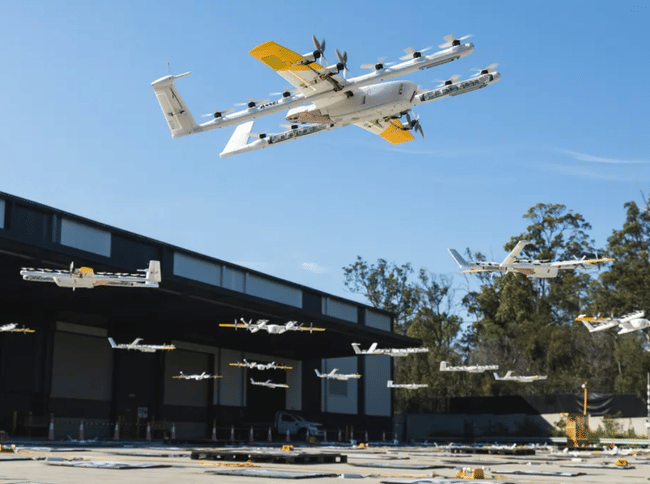
The Bay Area move has both symbolic and strategic weight. Wing has now completed more than 750,000 deliveries globally, operates through partnerships with Walmart and DoorDash, delivers items in as little as 30 minutes and has extended service hours to nighttime in some markets using infrared navigation. Competing directly in the heartland of Silicon Valley, where Amazon is also scaling drone delivery, signals that Alphabet is ready to translate Wing from a proof-of-concept into a logistics platform with real commercial scale — extending the company's ecosystem into the physical world that Amazon, FedEx and UPS have long dominated.
Why the Bay Area
The San Francisco Bay Area is not a random choice. It's one of the most densely populated and technologically advanced places in the U.S., where consumers are accustomed to fast delivery and willing to test new services before the rest of the country. It's also an environment Wing is familiar with - the company not only started here, but starting in 2024, DoorDash is building a logistics infrastructure in the Mission District designed specifically to work with drone systems.
The Bay Area also presents a regulatory challenge. Dense developments, wind corridors from the Bay, high-rise buildings and complex airspace all place high demands on navigation systems. Successfully navigating this environment would open the door for Alphabet $GOOG to dozens of other U.S. metropolitan areas where, until now, drone delivery has hit technical limits.
How delivery works
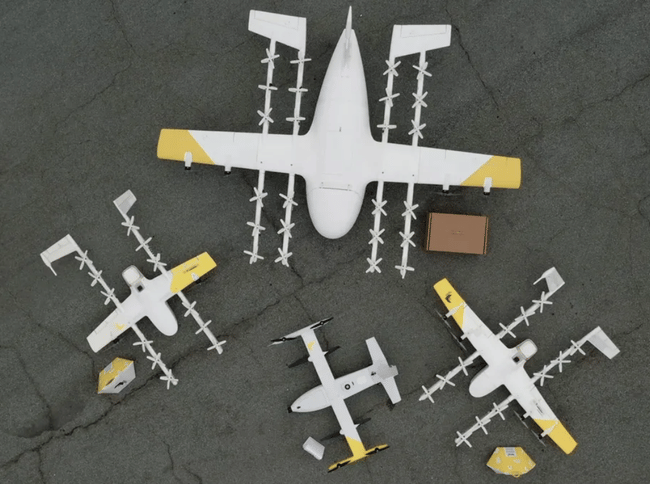
Wing drones are lightweight, fully automated machines designed to fly directly to a customer's home. Key parameters:
Carrying capacity of approximately 2.3kg - ideal for food, medicine, smaller consumer goods or restaurant food.
Travel speed up to 105 km/h.
Range of approximately 10 kilometres from the dispensing point.
Standard delivery time within 30 minutes of order.
The drone does not land - it lowers the delivery on a rope directly into the garden or front of the house, bypassing obstacles such as fences, cars or pets. The whole process is autonomous and does not require a courier.
Partners
Alphabet Wing in the US works with two key players covering different market segments:
Walmart $WMT - groceries, over-the-counter drugs, cleaning products and household consumables. In January 2026, Alphabet announced the expansion of the collaboration to 150 additional Walmart stores. In total, the network is expected to cover over 270 locations by 2027, potentially reaching up to 40 million customers across the US.
DoorDash $DASH - delivering prepared meals from restaurant chains like Wendy's, Panera Bread or other platform partners. Here, Wing acts as the logistics engine, while DoorDash handles the ordering system and customer relationship.
The combination of the two partners gives Alphabet access to two of the largest quick delivery categories in the U.S. - groceries and food delivery - without having to build its own customer platform from scratch.
Innovation: drone + ground robot
One of the most interesting experiments Wing is currently testing is a collaboration with Serve Robotics, a specialist in autonomous ground delivery robots. The principle is simple but ground-breaking: a Serve ground robot picks up the food directly from the restaurant, moves to a predetermined location and hands the delivery to a Wing drone, which delivers it to the customer by air.
This is the first real connection of two autonomous delivery layers in a commercial operation - from the curb to the air. In doing so, Alphabet is solving one of the key problems in drone logistics: how to get a shipment from source to drone without involving human labor. If this integration proves successful in the Bay Area, it opens the way to fully automated delivery corridors in cities.
What this means for Alphabet and its investors
Wing is proof that Alphabet can take "moonshot" projects into real business - the same path that Waymo took in autonomous driving. Division X, from which Wing emerged, has historically attracted criticism for the high costs and unclear commercial future of its projects. Wing is beginning to refute this criticism with numbers.
The drone delivery market is estimated to be worth about $1.5 billion in 2026, and analysts reckon it could reach between $7 billion and $27 billion by 2031, depending on the pace of regulatory easing. Alphabet holds the technological edge in this segment thanks to integration with Google's AI infrastructure, advanced computer navigation and flight in complex environments - exactly what the dense Bay Area development will test to the fullest.
For now, Wing doesn't represent a standalone fundamental valuation factor for Alphabet stock, but it reinforces a broader narrative: Alphabet is not just a search-dependent advertising firm, but a tech conglomerate capable of building the physical infrastructure of the future. At a time when investors are watching Alphabet diversify its revenue beyond advertising, every Wing success story reinforces this narrative.