
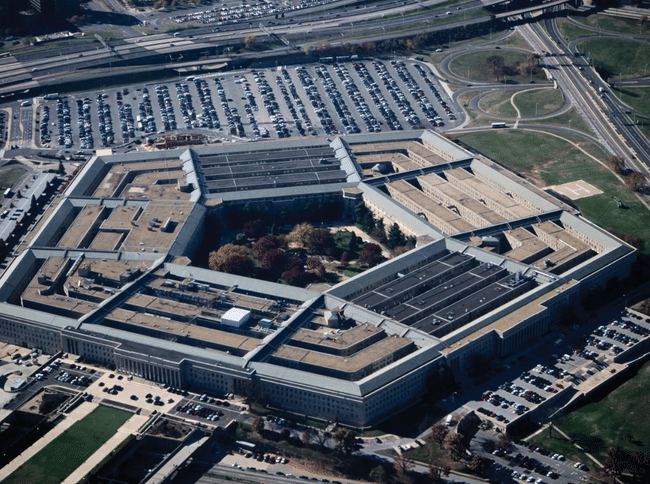
The Pentagon announced one of the largest software contracts in its history. Dell Federal Systems has been awarded a five-year, $9.7 billion contract to supply and manage Microsoft software for the US armed forces. The deal includes licenses, cloud subscriptions and Software Assurance services across classified and unclassified systems and covers not only the Department of Defense itself, but also affiliated agencies and components including the intelligence community and the Coast Guard.
Shares of Dell Technologies, trading under the ticker $DELL, reacted immediately, jumping roughly 4.6% to $319.40 in aftermarket trading. This surpassed the previous 52-week high of $312.14 and continued the exceptionally strong gains of recent months. Over the past month, Dell has gained approximately 48% versus roughly 5% growth in the S&P 500 Index, and year-to-date has posted a gain of over 138% versus roughly 9% growth in the index. For investors, this confirms that the market increasingly views Dell as a key player in enterprise infrastructure and federal IT contracts, not just a "computer maker."
Savings of $422 million per year through centralization
The key argument for this deal is not just the technology, but the savings. According to Pentagon Chief Information Officer (CIO) Kirsten Davies, the new framework agreement is expected to save the Department of Defense approximately USD 422 million per year. The source of these savings is the centralization of budgets and purchases - instead of each military branch, agency and command acquiring software separately, licensing requirements will now be consolidated into a single purchasing structure.
Historically, a fragmented acquisition system has led to massive duplication and inefficiencies. Each component handled its licenses, renewals, support, and cloud separately, often at different terms and price levels. Over years of uncoordinated sourcing, this resulted in unnecessary spending, unused licenses, and a complex mix of contracts that was difficult to audit. The new "second generation" agreement is intended to address these issues by bringing together key Microsoft $MSFT software and services into one consolidated framework that applies across the entire department.
How Dell won: five years of competition and price pressure
The contract is not the result of an overnightpolitical decision, but a five-year competition in which Dell Federal Systems beat out several competitors. Bidders were evaluated based on the competitiveness of their offerings, comparison to General Services Administration (GSA) price lists, and the overall value they were able to deliver to the Department of Defense.
The result is a framework that will allow the Pentagon to purchase Microsoft licenses, cloud subscriptions (e.g., Microsoft 365, Azure services) and Software Assurance across various classification levels - from unclassified administrative systems to highly sensitive and classified environments. Given that the Pentagon is one of the largest employers in the world, with over 2.1 million military personnel and over 800,000 civilian employees, unifying licensing policy and support represents a massive intervention in the way federal IT operates.
The agreement is also intended to eliminate redundant licenses and overlaps - situations where different services were paying for the same or similar technologies in different contracts, often without the ability to share capabilities. This type of "licensing waste" is typical of large government organizations, and this is where much of the claimed savings lie.
Political context: Dell, "Trump accounts" and the White House
However, the contract has not only a technical and financial dimension, but also a political one. Michael Dell, founder and CEO of Dell Technologies, has been in the spotlight in recent months for his active involvement in the agenda of President Donald Trump's administration. Dell has pledged $6.25 billion to fund investment accounts for children, referred to as "Trump accounts," a government initiative to encourage long-term savings and investing for younger generations.
At a recent White House event, President Trump publicly praised Michael Dell and explicitly urged Americans to buy computers and technology from Dell. Michael Dell has also joined Trump's Council of Advisors on Science and Technology, further connecting the company to the political decision-making center in Washington. So the timing of the announcement of this contract - shortly after Trump publicly praised Dell - naturally raises questions about political ties and the fairness of the competitive process, even though it was formally conducted under standard procedures.
For investors, this means that Dell has become not only a technology player, but also a distinctly political one. On the one hand, this opens the door to more government contracts and major modernization projects; on the other, it increases the company's sensitivity to potential changes in administration, political priorities, and congressional investigations.
Dell shares at new highs, Microsoft still 'cheap' on valuation
The contract was clearly welcomed positively by the market. Dell Technologies shares jumped 4% in extended trading, marking a new all-time high and another break above the 52-week high of around $312. The stock has then added approximately 48% over the past month.
In terms of the broader ecosystem, Microsoft $MSFT, whose software is the subject of the contract, is also worth noting. According to GF Value-type metrics (GuruFocus), at a price of around $412-415, Microsoft appears to be approximately 25% undervalued relative to an estimated intrinsic value of around $550. The P/E ratio is around 24.5 times, while the five-year median is over 34 times. This suggests that while the market is pricing in Microsoft's growth and quality, in terms of historical valuations it is still not paying the absolute premium it has been willing to pay in recent years.
For investors, it may be interesting to note that both parties benefit from the contract - Dell cashes in directly on revenue and margins within its federal division, Microsoft strengthens its "embedded" position in the U.S. government's critical infrastructure, and gains further confirmation that its platform is the de facto standard for large institutions.
Implications for federal IT: the end of the era of fragmented contracts?
The Dell deal is an example of a broader trend: the logic of consolidation that has taken hold in the commercial world over the past decade (SaaS, cloud, single licensing frameworks) is gradually making its way into federal infrastructure. In an environment dominated for years by duplication, outdated contracts, agency siloing, and buy-as-you-go purchasing, the push for centralization is almost inevitable.
The Pentagon has asked Congress for a budget of approximately $1.5 trillion for fiscal year 2027 and faces enormous pressure from lawmakers to finally deliver a clean audit and demonstrate value for money. Technology, and enterprise software in particular, has become one of the most visible places where real savings can be found in a relatively short period of time without impacting the military's front-line capability. Consolidating Microsoft licenses under one framework and one integrator is a logical step in this strategy.
From an investment perspective, this contract demonstrates two things:
in an environment where many contractors promise "efficiencies and savings," the winner is the one who can demonstrate the ability to operate within a complex government system
federal IT modernisation has yet to make a major splash - this contract may set a precedent for similar mega-contracts in other departments
What's in it for investors
For Dell:
Giant benchmark contract worth $9.7 billion strengthens Dell Federal's position as a key integrator for government IT
Stable, highly visible revenue over a five-year period supports the case for a higher valuation relative to pure hardware manufacturers
Political ties to the administration may open up additional opportunities, but also increase political risk
For Microsoft:
Confirmation of standard platform status in the world's largest military organization
Long-term revenue security from licensing, cloud and support in an environment that doesn't just go from vendor to vendor
From an investment perspective, a combination of "quality" and still relatively moderate valuation relative to its own history