
When people hear “the weight-loss drug business,” most think of two names: Denmark’s Novo Nordisk $NVO and the U.S.’s Eli Lilly $LLY. These are the companies that produce Wegovy and Zepbound, injections from the so-called GLP-1 class, which in just a few years have transformed obesity medicine into one of the hottest markets in the entire pharmaceutical industry. But every boom like this also attracts players who don’t actually manufacture anything, yet still manage to grab their share of the pie.
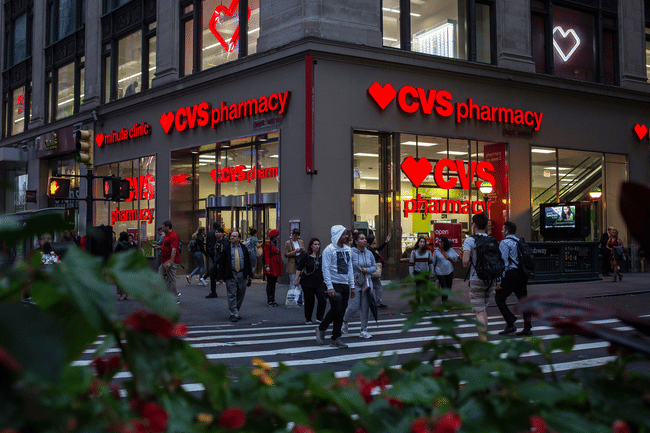
CVS Health $CVS, the largest U.S. pharmacy chain, is now trying to squeeze itself into exactly this role. Instead of developing its own drug, it has built an entire service ecosystem around those of others. And part of Wall Street sees this as a reason to look at the stock with fresh eyes.
From the pharmacy to the doctor’s office, from the counter to a subscription
The main problem with GLP-1 drugs has never been that they don’t work. The problem has been how to get them. They cost hundreds of dollars a month, insurance companies cover them for weight loss only sporadically, and some doctors prefer not to prescribe them at all because of this uncertainty. Added to this are unpleasant side effects, which cause many patients to give up treatment after a few weeks.
CVS is tackling this in a way that makes sense for a chain with more than 9,000 pharmacies across the U.S.—it positions itself between the patient and the medication as an intermediary that simplifies the entire process. The new program offers:
a $49 virtual consultation with a clinical professional who will assess the patient and, if appropriate, prescribe the medication,
medications starting at $25 per month for insured patients, $50 for some Medicare beneficiaries, and $149 for uninsured individuals,
personalized support from a specialist and over-the-counter products to manage side effects.
In other words: CVS isn’t just selling a box, but an entire service—from the initial consultation through the prescription to support throughout treatment. And because each of these patients returns every month, this is exactly the type of recurring revenue that retailers love.
“With GLP-1, access to medication is only half the equation. Patients also need support to stick with their treatment and see results. From managing side effects to finding ways to reduce costs—our pharmacists are there every step of the way.”
Sid Tenneti, Vice President and Acting Head of the Pharmacy and Consumer Wellness Division, CVS Health
Wall Street Raises the Bar, but Cautiously
Bank of America $BAC raised its price target from $100 to $110 following the announcement of the program and maintained its “buy” rating. This is by no means an ecstatic estimate—the stock is trading around $104 today, so the new target suggests only modest upside potential. Rather than a bet on skyrocketing growth, it’s confirmation that the company has returned to the ranks of serious players worth talking about.
And that comeback is worth noting. CVS has had a couple of really rough years, during which it was weighed down by rising costs in its Medicare Advantage division and its stock plummeted. This year, the picture is different—the stock is up about 30% since the start of the year and has more or less doubled from last year’s low of around $58, trading near its annual high above $106.
The Numbers That Hold the Story Together
The marketing narrative about weight-loss injections wouldn’t be enough on its own if it weren’t backed by solid results. In the first quarter, CVS reported:
revenue of $100.4 billion, up 6% year-over-year,
adjusted earnings per share of $2.57, a 14% increase,
and an upwardly revised outlook for the full fiscal year 2026.
"We’ve started 2026 with strong momentum, and our focused leadership and strategic actions across CVS Health have led to another quarter of outstanding results."
David Joyner, CEO of CVS Health
The improvement is mainly due to the fact that the company has finally managed to rein in costs in its insurance business, which had previously been eroding its margins. The fact that CVS has pulled itself out of this mess speaks to the resilience of its business model, which combines pharmacies, insurance, primary care, and drug distribution under one roof. The GLP-1 program is just another piece of this puzzle—the company retains the patient from consultation through prescription to follow-up care, rather than letting them go to the competition after dispensing the medication.
CVS’s market value currently stands at around $133 billion, which is roughly 2.8 trillion Czech korunas. By U.S. healthcare standards, this makes the company a heavyweight, though it is still significantly smaller than the aforementioned injection manufacturers.
Dividends as the Cherry on Top
For investors seeking a steady income, CVS offers yet another compelling reason. The forward dividend yield hovers around 2.5%, which is more than double the S&P 500 index average, where the yield stands at around 1.1%. And this isn’t a dividend that’s stagnating—over the past decade, the company has raised it by roughly 56%.
It’s interesting to see how two things that, at first glance, don’t seem to go together are coming together here. On one hand, there’s the trendy, fast-growing weight-loss drug market, where billions are at stake and investors are seeking growth. On the other hand, there’s the boring, stable corner pharmacy that has been paying dividends for years. CVS is trying to be both at once—and that’s precisely what sets its strategy apart from pure-play pharmaceutical companies.
If this pays off, it won’t depend so much on how many Wegovy prescriptions are written in the U.S., but rather on how many of those patients walk through CVS’s doors instead of those of its competitors. The pharmacy chain won’t profit from the boom in weight-loss injections by inventing a better drug. It will profit by becoming the place where people pick it up—and where they return every month.