
Nike is close to reclaiming one of the biggest showcases in world football. From the 2027/28 season it is in exclusive talks to become the official match‑ball supplier for all UEFA men’s club competitions – the Champions League, Europa League and Conference League – via a proposed four‑year deal with UC3, the joint venture created by UEFA and the European Club Association, which would finally end Adidas’s 25‑year run in the role and roughly double the current rights fees to more than 40 million euros per season. For the Swoosh, that means having its logo at the very centre of every kick, every goal and every replay in competitions that reach close to 1,2 billion viewers a year, at a time when the brand badly wants to remind fans and retailers that it still owns the biggest stages.
Whether that visibility translates into a real turnaround is another question. Nike is entering this deal while it wrestles with slowing sales growth, bloated inventories and a perception that product innovation has lagged, especially as faster, more focused challengers like On and Hoka eat into the running category and Chinese competitors press harder in Asia. Analysts point out that even wall‑to‑wall exposure on Champions League nights cannot by itself fix weak sell‑through in key markets such as China, where Nike has been losing momentum and shelf space, so the new UEFA contract looks less like a silver bullet and more like an expensive stage on which the company will still need fresh designs and sharper execution if it wants to turn marketing dominance back into performance on the income statement.
Nike takes the ball from Adidas and heads to the Champions League
According to UC3, Nike and UEFA are in exclusive contract negotiations for official balls for men's club competitions from the 2027/28 season to 2030/31. If the deal is concluded, it will be the first time that balls for the Champions League and other competitions will not be supplied by Adidas $ADS.DE, which has held the rights continuously since 2001.
Nike $NKE has previously shown a willingness to significantly overpay competitors to win key football contracts. In 2023, it also overbid Adidas for a contract with the German Football Association (DFB), offering double the roughly €50 million a year Adidas was paying at the time, according to Handelsblatt. The upcoming FIFA World Cup in 2026 thus represents another major marketing platform for Nike, to which the new ball for European competitions logically connects.
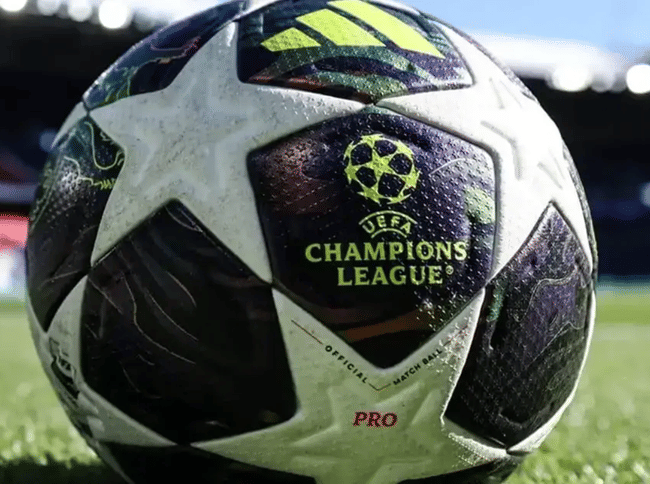
According to the FT and other sources, the total value of the contract with UEFA could exceed €40 million a year, roughly twice as much as the current contract. In addition, the Guardian points out that the upcoming change of supplier also marks the end of the iconic "star" design of the Champions League ball that Adidas has used since 2001, and opens up space for a completely new visual language associated with the Nike logo. This may trigger a new wave of fan interest in replicas and collector's editions, but the impact on the main sales segment - footwear and apparel -will be rather indirect.
Visibility yes, problem solving no
Analysts agree that this is a marketing-attractive win for Nike, but not a solution to the company's major pain points. Morningstar analyst David Swartz called the negotiations with UEFA a "nicely won deal," but added that he personally never saw the logo on the ball and didn't say: "I need to buy new shoes." Similarly, David Bartosiak of Zacks pointed out that "a highly visible corporate partnership is not a silver bullet" unless the brand brings genuinely new and functional products to market.
This is precisely Nike's biggest problem. In recent years, the company has been losing shelf space to brands like On Holding and Hoka, which bring fresh designs and technically distinctive running models. YipitData data cited by Reuters showed that Nike's share of footwear at major U.S. retail partners has fallen, while On and Hoka have increased their share several-fold in a single year. That has forced Nike to launch a three-year, $2 billion cost-cutting program that includes, among other things, cutting some iconic but lower-growth lines like the Air Force 1.
At the same time, Nike has struggled with excess inventory and repeated disappointing quarterly results. In late March, the company warned that sales would fall in the fiscal fourth quarter, with a key drag coming from China, where sales have fallen by double-digit percentages for several quarters in a row. New CEO Elliott Hill, who takes over in 2024, may have declared a return to "core sports" like running and football, but specific product innovations that would generate mass enthusiasm like Air Jordans once did are so far absent.
Champions League as a showcase of credibility
From a marketing perspective, however, this is still a very valuable victory. The Champions League has a global audience of around 1.2 billion viewers per season, according to UEFA's annual reports, which is a showcase of the highest order for any sports brand. M Science analyst Drake MacFarlane said the deal could help Nike in the medium term, particularly in Europe, and "support the regaining of athletic credibility" with fans and players, but added that the effect would only be felt over time.
Brands like Nike and Adidas have traditionally used official balls and jerseys primarily to build image, associate with big moments and to boost replica sales. The real boost to footwear and textile sales comes when these symbols are backed by strong product innovations - iconic cleats, running models or lifestyle silhouettes that fans want to wear off the field.
It's the latter part of the equation that Nike is missing so far: the ball will draw eyeballs, but the shoes and apparel have to convince on their own. Without genuinely new, functional and well-communicated products, the exclusive UEFA ball will remain more of a luxury billboard than a real sales engine.