
Microsoft's internal plan was to make roughly $92 billion out of its cumulative $13 billion investment in OpenAI, which is many times more than the company invested. According to court documents and Satya Nadella's testimony, this was consistent with a purely financial return model that was further set up to assume roughly 20 percent annual growth after 2025 and a rapid doubling of revenues within four years.
Today, it looks like reality is giving Microsoft the benefit of the doubt - on paper, it has about a 27% stake in OpenAI, which the last round of funding valued at $852 billion, putting the value of its stake at around $220-230 billion. Nadella openly said in court that "it paid off because we went out on a limb early", but at the same time the court filing reveals just how detailed Microsoft planned ahead for the extreme return on capital from one "moonshot" AI partnership.
What the original return math looked like
According to a January 2023 memorandum cited in court by the media, Microsoft $MSFT modeled in internal material from President Brad Smith that a cumulative $13 billion investment in OpenAI could yield roughly $92 billion in total returns. In a footnote, the document mentioned an expected roughly 20% annual growth rate after 2025 - i.e., the assumption that the revenue stream associated with OpenAI would roughly double in four years.
This "92 billion" target did not arise in a vacuum. Microsoft looked at OpenAI as a combination:
direct financial return from equity stake
indirect returns through Azure (massive cloud contract)
and the strategic value of first access to the most advanced models
In October 2025, the partnership restructuring confirmed that Microsoft's investment in the for-profit portion of OpenAI was valued at approximately $135 billion, which was equivalent to approximately 27% share on a fully diluted basis. The current $852 billion post-money funding round in March then increases this paper gain even further - media reports are talking about around 17-18 times the original $13 billion investment.
Nadella in court: no objections from Musk, just a fast-growing "bet" that he himself initially didn't believe
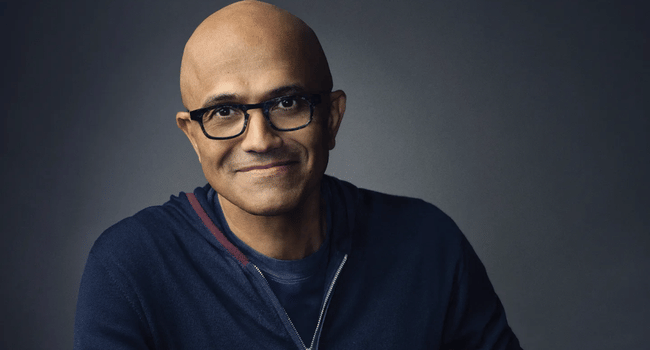
Satya Nadella testified as a witness in the Musk v. Altman case, where Elon Musk claims that OpenAI has deviated from its original non-profit mission and that Microsoft played a key role in its "conversion" into a for-profit AI corporation. Nadella told the court that Musk never contacted him with concerns about Microsoft's investment in OpenAI, even at key moments in the partnership - when the collaboration was announced in 2019, when the exclusive license for GPT-3 was granted in 2020, or when a large investment package was announced in 2023.
Internal emails produced to the court show that Nadella himself was initially rather sceptical. In 2018 memos, he questioned what business sense it actually made to give OpenAI significant discounts on Azure when Musk was telling everyone at the time that the company was close to a breakthrough in AGI, but the "business case" for Microsoft was not clear. Then in 2022, he wrote in an internal email that he didn't want Microsoft to become "another IBM" while OpenAI would become the new Microsoft - a direct reference to how IBM once let go of a key value in the PC era.
Nadella confirmed in the courtroom that the investment "paid off well because we took the risk early" - and today's numbers back him up. In terms of return on investment, Microsoft is the clear winner of two decades of AI research so far.
OpenAI as the most valuable private company in history
OpenAI closed a historic $122 billion funding round in March 2026 at a post-money valuation of $852 billion, breaking all previous records for private technology companies. The round involved a number of strategic investors . including Amazon, Nvidia $NVDA, SoftBank $SFTBY and Microsoft $MSFT - with the three largest partners reportedly collectively pledging around $110 billion of the total.
For Microsoft, that means a paper multiple of around 17-18x against the 13 billion they put in. Meanwhile, back when the deal was restructured in October 2025, the companies agreed that OpenAI would commit to buying about $250 billion worth of Azure services over a longer period, turning the partnership into a giant, upfront "tacked-on" cloud contract as well.
In addition to the stake itself, Microsoft thus gained:
A long-term cloud revenue stream
access to the most advanced models for its own products (Copilot, Azure AI)
and the reputational effect of being an "AI leader", which translates into valuations for other businesses
New phase of partnerships: less exclusivity, still a lot of money
In April 2026, Microsoft and OpenAI announced a revised agreement that takes the partnership into a new phase. Key points:
Microsoft remains the primary cloud partner, but OpenAI can now serve customers through other cloud providers - exclusivity falls.
Microsoft retains the license to OpenAI's intellectual property for models and products until 2032, but now as a non-exclusive license.
Microsoft will no longer give OpenAI a share of revenue from its own products built on their models. Instead, payments from OpenAI towards Microsoft (for cloud and revenue share) will run until 2030, with an overall cap.
In practice, this means that the initially very tied partnership is gradually opening up - OpenAI is getting more operational freedom, while Microsoft retains a strong economic position (equity share, cloud revenue, IP licensing) even as it gives up some exclusivity. It's a signal that OpenAI now doesn't want to be seen as an extended arm of Microsoft, but rather as a standalone "AI utility" for the entire market.