
Visa has also added gas in buybacks after its best revenue growth since 2022, with a new $20 billion program lifting total buyback capacity to $33 billion. At the same time, we're seeing an avalanche of announcements from across the consumer and retail segments: from "Pool" Pool Corporation to PepsiCo and Western Digital to smaller brands like Lovesac and Lands' End. The common message is pretty clear - we generate enough cash, we believe in the business, and we find current prices attractive enough to aggressively pull our own stock off the market.
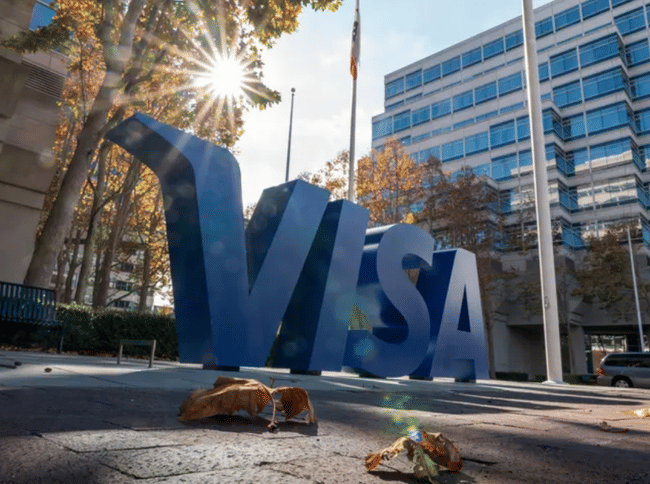
While a portion of investors still have their eyes glued to AI names, it is consumer-driven companies that are quietly becoming leaders in returning capital to shareholders. Record quarterly buybacks at Visa, increased authorizations at Pool, and a new $10 billion at PepsiCo show that buybacks are not just a cosmetic tool, but a critical component of overall returns. For shareholders, it means two things: each individual share represents a larger share of the company's profits - and management trusts its own valuation enough to be willing to spend billions of dollars on it.
Consumer firms are leading a new wave of buybacks
While investor attention often turns to AI and tech stars, another big story is quietly unfolding - the return of capital in the consumer and "consumer-driven" segment. Visa $V approved a new $20 billion share buyback program after a record quarter, bringing its total buyback capacity to $33 billion. It joins Pool Corporation $POOL, PepsiCo $PEP, Western Digital $WDC, and a number of smaller retail brands that have increased or reauthorized their buyback programs in a short window of time.
The common denominator is a combination of robust cash generation and a desire to reward shareholders in an environment where organic growth is not always linear. Companies dependent on consumer spending are signaling that demand is stable enough that they can afford to aggressively reduce the number of shares outstanding.
Visa: record results and $33 billion in buybacks
Visa had a very strong second fiscal quarter in 2026. Net sales came in at $11.2 billion, up 17% year-over-year - the fastest pace since 2022. GAAP earnings per share jumped 36% to $3.14 and adjusted earnings per share rose 20% to $3.31. The driver was both growth in payment volumes and the continued normalization of travel and cross-border payments.
In volume metrics, Visa added in key numbers: payment volume increased 9% in constant currencies, total cross-border volume grew 12% and the number of processed transactions jumped to 66.1 billion, up 9% from a year ago. This combination of business growth and margins gives management room to aggressively return capital.
In the second quarter of 2026, Visa returned a total of $9.2 billion to shareholders in the form of dividends and buybacks. Of that, $7.9 billion went to buy back approximately 25 million Class A shares, at an average price of $320.66 per share - the largest quarterly buyback in the company's history. In parallel, a new $20 billion buyback program was authorized, increasing total buyback capacity to approximately $33 billion. For long-term holders, this means a steadily declining number of shares outstanding and a higher weighting of each individual share in the company's earnings.
Pool Corporation: painful cycle, aggressive buyback
At the other end of the spectrum is the story of Pool Corporation, a distributor of pool and outdoor equipment. This sector went through a significant downturn after the covid boom - sales fell more than 10% year-over-year in 2023 before improving to about -0.4% in 2025. Even so, sentiment remained weak and the stock has corrected significantly since 2025.
After February's results, when the company presented its 2026 outlook with adjusted earnings per share expected to grow by 3% - well below what the market was expecting - the stock fell 14%. Overall, it is down more than 45% since the start of 2025 and down more than 20% in 2026. Management's reaction? A significant increase in the buyback program to $600 million, equivalent to about 9.3% of the market capitalization of about $6.4 billion.
In other words, the company is taking advantage of the low stock price and weak sentiment to aggressively reduce the number of shares outstanding. For investors who believe in a normalization of the pool market and a return to growth, this may be an interesting combination: a gradual correction in fundamentals + strong earnings support via buybacks.
PepsiCo: the classic "consumer giant" with a new $10bn programme
PepsiCo, one of the global leaders in beverages, is one of the defensive consumer companies that have traditionally combined a stable business, dividend and buybacks. In 2026, it will continue this model with a new $10 billion share buyback program.
At the same time, the company is working to improve its cost structure and respond to changes in consumer behavior, which is more sensitive to price and product mix. Still, it has been able to report strong results, with growth near 19% in 2026, even in an environment of increasing competition and pressure on margins. The combination of growth, cost restructuring and a large buyback makes PEP a classic "compounder" position: the yield is made up of both fundamentals and a declining share count and dividend stream.
Western Digital: buyback after a rocket year
Western Digital is a different story - a cyclical technology player in memory and storage that has had an explosive performance in the stock. In 2025, the stock delivered a 284% total return, making WDC the best-performing title in the S&P 500. And they've already added more than 60% in 2026.
Even so (or maybe because of it), the company announced a new $4 billion share buyback program on February 3 - double the previous $2 billion authorization. Buybacks thus act as a way to return capital when the cycle plays in the company's favor, while also signaling management's confidence in the sustainability of the current improvement in results. For investors, this is a slightly different type of "play" than for defensive consumer companies: here it is more about taking advantage of a strong phase of the cycle and monetizing an extremely good year.
Smaller consumer brands: LOVESAC, Lands' End, Zumiez, Scholastic
The trend of expanding buyouts is not limited to the big blue-chips. In late March and early April, a number of consumer and retail companies announced new or increased buyback programs in relatively short succession, suggesting a broader wave of confidence in the stability of demand.
The Lovesac Company increased its buyback authorization by $40 million to a total of approximately $54.1 million. Following the announcement, the stock jumped 12.5%, showing how sensitive a smaller title can be to signals of a return of capital.
Lands' End approved a new $100 million buyout program.
Zumiez authorized a buyout of up to $40 million.
Scholastic Corporation also announced buyouts, completing the picture of broader movement in the retail and consumer segments.
Across the board, the motive is similar: management is signaling that it finds current valuations attractive, and that the company is generating sufficient cash flow to actively withdraw shares from the market.
What the buybacks say about the market and the consumer
Analysts and company documents agree: share buybacks are one of the easiest tools to increase the value of outstanding shares. By reducing the number of shares outstanding, each share increases its share of a firm's profits and assets, which, over time, supports earnings per share growth and often stock price growth. For companies such as Visa, PepsiCo or Western Digital, buybacks are a solid part of capital strategy; for smaller players such as Pool or Lovesac, they additionally act as a signal to management that they believe in their own story despite temporary problems.
The concentration of new programs in the consumer and "consumer-driven" segment in particular suggests two things: first, that despite what is happening around inflation and interest rates, demand remains strong enough for companies to generate significant free cash flow; and second, that managements are increasingly looking to actively manage capital and reward shareholders rather than just hoard cash. For investors, this opens up the space to seek not only revenue and earnings growth, but also quality "return on capital" stories - and those are what they are leading today.