
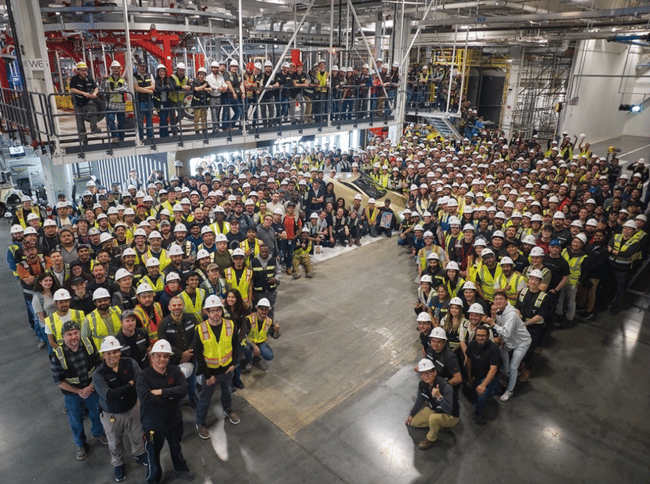
Tesla says the first production Cybercab has come off the line at Gigafactory Texas. The car is built for autonomy only, with no steering wheel and no pedals. That is a major signal, because Tesla is treating Cybercab as more than a new model. It is a bet that the company can build a new business around autonomous transport.
For investors, the weak point is not the factory. The weak point is whether the software and the legal approvals catch up fast enough. A robotaxi business needs permission to operate without a human driver, and it needs a system that can drive reliably in real traffic. Until those two parts are in place, a vehicle that is ready to build is not yet a vehicle that can generate large, recurring revenue.
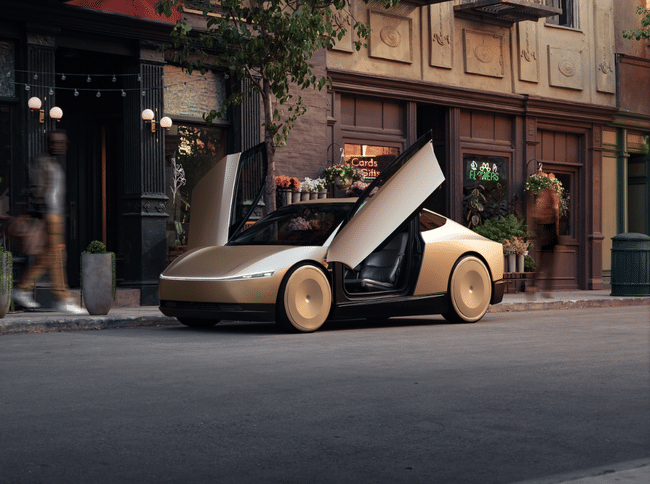
Tesla $TSLA is betting that a purpose-designed car without physical controls is a better and cheaper route to robotaxis than modified conventional cars. The Cybercab is a two-door, two-seat electric car with a minimalist interior and everything subordinated to autonomy, i.e., no way for a human to "take over the wheel" in an emergency. This is a major difference from previous tests of the robotaxi concept, which in practice often relied on existing models and assumed human supervision. From Tesla's perspective, this makes sense technologically and cost-wise: if you remove the steering wheel, pedals and some of the traditional systems, you can optimize space, weight and manufacturing for a single purpose. From a market perspective, however, it increases the demands for proof of safety, because neither the customer nor the operator has a "safety brake" in the form of a human behind the wheel.
Ambitions around price and operating costs also come into play. Elon Musk and Tesla have repeatedly worked with a price target of around $30,000 and the idea that total operating costs could fall to around $0.20 per mile. If such parameters are indeed close to reality, it changes the math of urban transportation: autonomous driving could be cheaper than conventional taxis and in some situations competitive with car ownership, especially in cities. But here's a detail worth noting: Tesla isn't just aiming for "own app and own fleet". It also mentions demand from commercial operators while acknowledging the possibility of private ownership. This would theoretically broaden the addressable market, but at the same time make it even more regulatory intensive, because selling a driverless car to ordinary customers is in a whole different league from limited testing in terms of approval and liability.
The biggest problem is not on the factory floor, but in the software and the legal framework. Today, Tesla presents its Full Self-Driving system as an advanced driver assistant that still requires human supervision. To jump from "supervised" assistance to a mode where the human in the car doesn't even have the ability to intervene is a leap that no one has yet clearly delivered on a mass consumer scale. Into this comes regulatory reality: US safety standards have historically counted on the car having human controls. There are paths through the exceptions, but they tend to be slow, conditional, and often limited to demonstrations or specific deployments. An example is Zoox, which received an exemption from NHTSA for purpose-designed autonomous vehicles without traditional controls, but only after a long process and with specific conditions.
At the same time, Tesla is hinting that the ramp-up of production will be gradual and that full production is targeted for later in 2026, with mention in the space of a full production start in April 2026. This is typically the stage where the reality of production goals meets the reality of approvals and safety verification: even if the car can be produced quickly, deployment can be hampered by the permitting process, insurance and liability rules.
Risks and potential impacts
The biggest risk is: either Tesla succeeds in pushing autonomous service in a mode without human drivers, or the Cybercab will be trapped in limited testing and pilot programs for a long time. In the first case, a new source of growth opens up, with potentially higher margins than traditional car sales, as revenue would come from running the service and from high asset utilization. In the second case, it may be a capital intensive project that will generate more costs, pressure on market confidence and further delays.
The second layer of risk is reputational and legal. With a robotaxi program, perceptions of security tilt extremely quickly on an incident-by-incident basis and on how transparently the company shares data. For Tesla, there have been recent media comparisons of incidents in autonomous testing versus normal driving, which may increase pressure from regulators and the public, even if these comparisons are partial and methodologically questionable.
The third risk is competitive: Waymo and Zoox are already running in a different deployment and regulatory regime, often with a different technological philosophy and with different safety data collection and publication. Tesla is betting on a camera-based approach and scaling through its own platform, but if it turns out that regulators prefer a more conservative, slower path with stricter conditions, this could slow Tesla's momentum no matter how many cars it can produce.
What to watch next
What specific approval regime Tesla will choose for operating a vehicle without a steering wheel and pedals, and whether it will apply for exemptions similar to those already granted by NHTSA to other projects.
Whether Tesla will release quantifiable safety data from the Austin tests and what the insurance and liability requirements will look like.
Whether production ramp-up dates and especially commercial deployment dates will be confirmed, not just "first off the line".
How Tesla will communicate a price target of around $30k and whether it will be a realistic starting point or a long-term goal tied to volumes.